

Wines and Spirits.
Visual enhancement of e-commerce site specific to Wines and Spirits category page.
Problem Statement
Users navigating iShopChangi’s Wines and Spirits category page encounter challenges in the current browsing experience and purchasing flow. The lack of detailed information on the product detail page hinders users’ ability, especially novices, to make informed decisions about the featured beverages.
Objective
The goal is to enhance the overall user experience on iShopChangi’s Wines and Spirits category page by addressing the following aspects:
- Improved Browsing Experience: Streamline the navigation process to make it more intuitive and user-friendly, ensuring that users can easily explore the diverse range of beverages.
- Enhanced Purchasing Flow: Optimize the purchasing journey, making it more efficient and straightforward for users to add products to their cart and complete the checkout process seamlessly.
- Comprehensive Product Information: Enhance the product detail page by providing more detailed and informative content about each beverage. This includes tasting notes, product characteristics, and any relevant details that aid buyers, particularly those new to the selection, in making well-informed choices.
By addressing these objectives, the project aims to elevate the overall user satisfaction and increase the likelihood of successful conversions within the Wines and Spirits category.
Client:
Changi Airport Group
Project Duration:
Started in April 2021. Development started in December 2021.
My Role:
- UX Research
- Prototype and Wireframe
- Notetaker and observer during user interview
My Responsibilities:
I collaborated with the UX team, following a structured six-step process to guide us efficiently and effectively on our journey.
UX Process
| EMPATHY | DEFINE | IDEATE | PROTOTYPE | TEST | IMPLEMENTATION & RESULT |
|---|---|---|---|---|---|
| Stakeholder Brief | Problem statement Data Gathering User Journey Map | Synthesise findings Brainstorm on solutions Wireframe | Translate proposed solutions into prototype Conduct a Screener Recruitment Survey | User Interview Revise prototype | Handover of designs to Dev’t team Verify with QA and tested the |
My contribution
Our team recently conducted a comprehensive competitive analysis, scrutinizing 10 international and local ecommerce websites in the beverage sector. The goal was to gain insights into how product information is presented across various platforms.
Utilizing data analytics, we identified ‘Wine,’ ‘Sake,’ and ‘Whisky’ as the top-selling beverages, providing a focused direction for our research. The team also delved into UI trends, pinpointing components that contribute to increased user engagement and play a crucial role in purchasing
Research
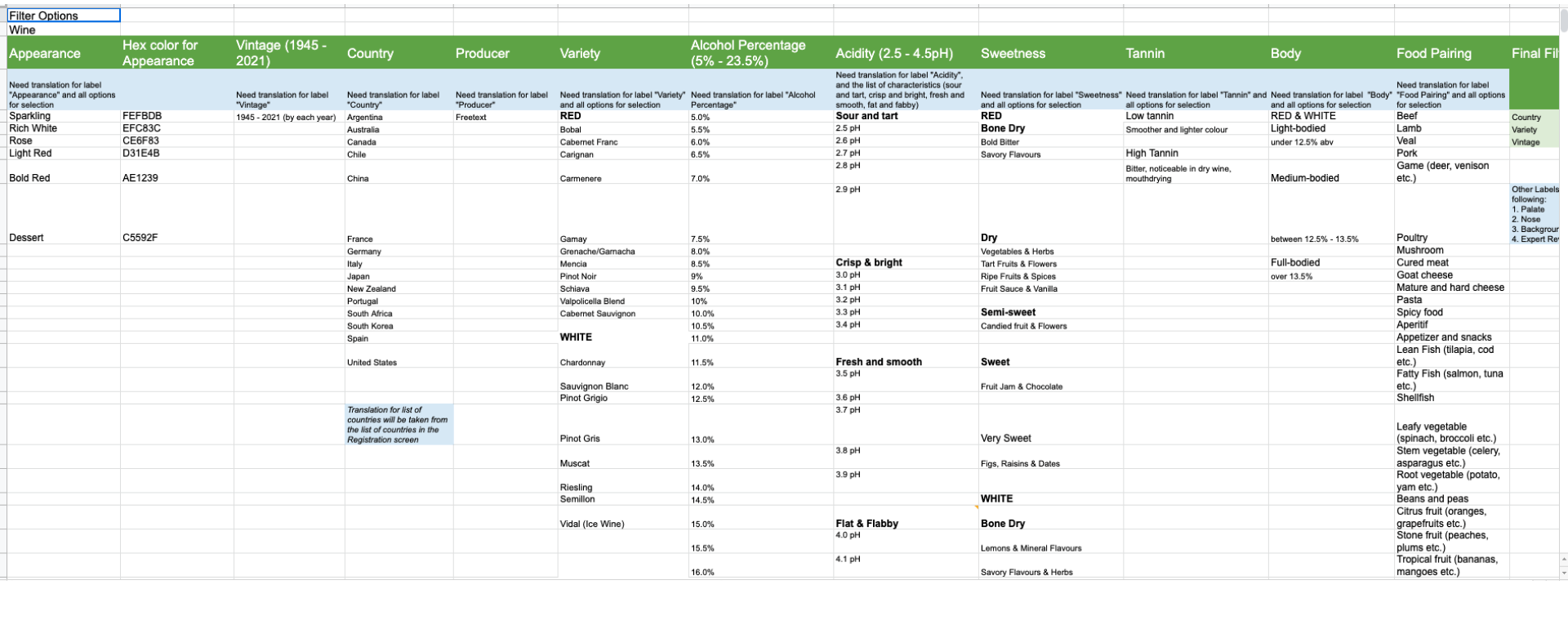
My main objective is to discern the distinct attributes associated with ‘Wine,’ ‘Sake,’ and ‘Whisky.’ Additionally, I observed various UI elements that effectively represent each of these characteristics.

Data Collected
In my investigation, I cataloged the values corresponding to the characteristics of each beverage. For instance, ‘Appearance’ exhibits distinct values for Wine, Whisky, and Sake. This data is also utilized in the filter functionality for the Product Listing Page.
User Interface Design
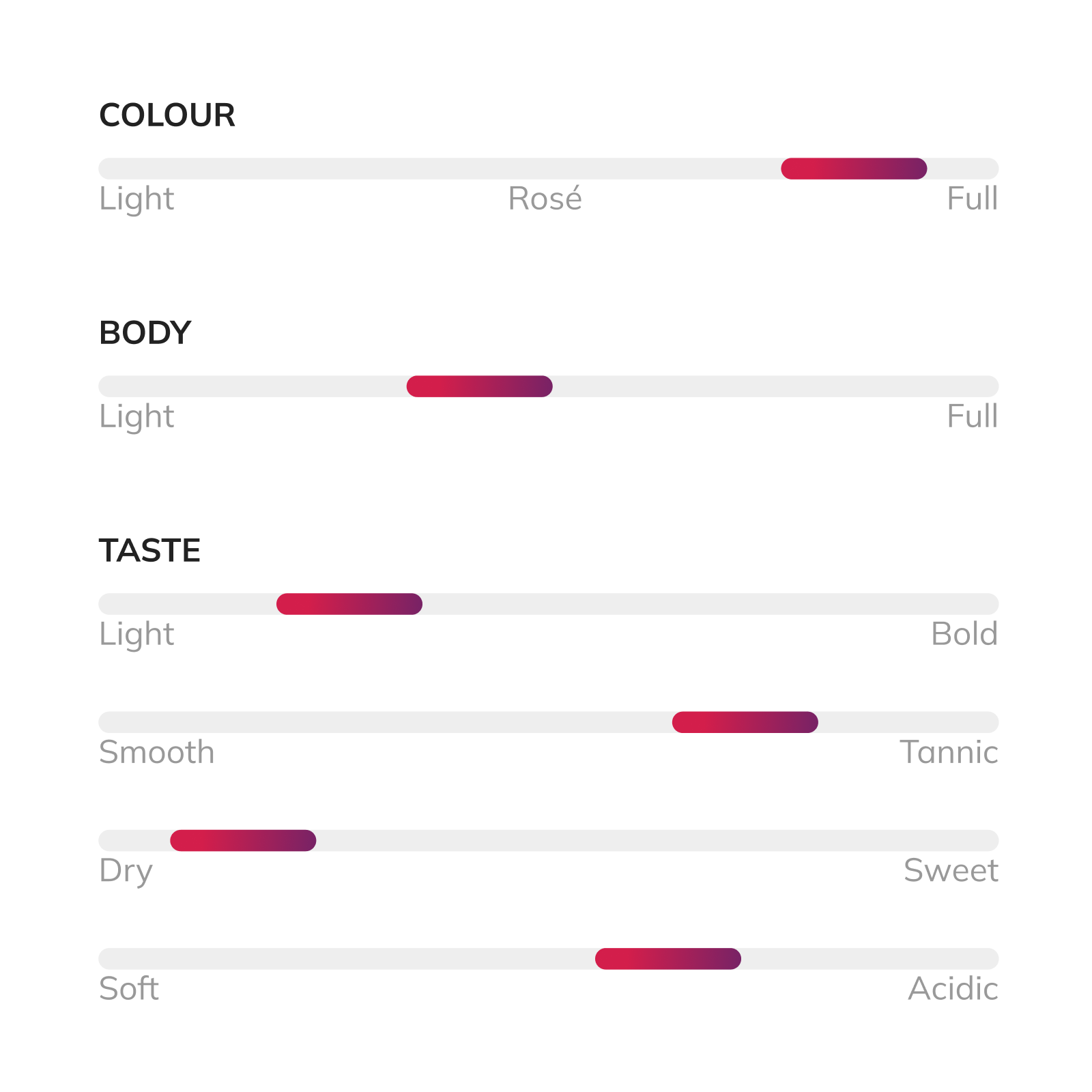
The design concepts I presented were categorized into ‘Simple’ and ‘Complex,’ considering dynamic content and the development process. After discussions with the team and stakeholders, we opted for the final design, ensuring information is easily captured and aligning with ShopChangi’s Design System.

Conclusion
The simple component that was used for testing, differed from the approved version, featuring a simple header and short descriptions for each characteristic. User testing yielded positive feedback, with participants finding the categorized information easier to understand.
Following discussions with internal stakeholders, a range slider was proposed and approved, prompting further research to define range values for ‘Wine’ and ‘Sake’ characteristics, as highlighted below. While it’s unclear if the approved component significantly impacted the user experience, it likely adds value for expert drinkers, whereas the tested component proved more beneficial for general consumers.


 FG Portfolio